Interactions Correctly?


How to Fix the Online to Offline Attribution Gap


Reveal the Tracking Gaps Behind Inaccurate Attribution
Paid search was delivering strong conversion numbers. The branch network was expensive and hard to justify on transaction data alone. So the media plan shifted branch investment pulled back, digital spend increased. It looked like the right call.
Not because the numbers were wrong, but because they were only showing half the journey.
Most organisations have more data than they know what to do with. What they do not have is online to offline attribution, data that can cross the line between a screen and a store, a website and a branch, a click and a conversation.
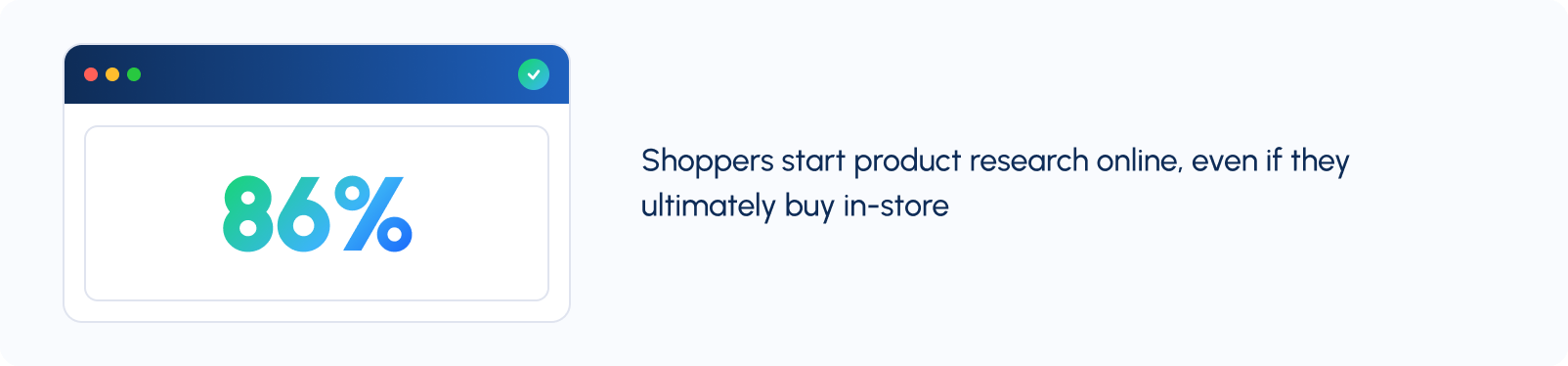
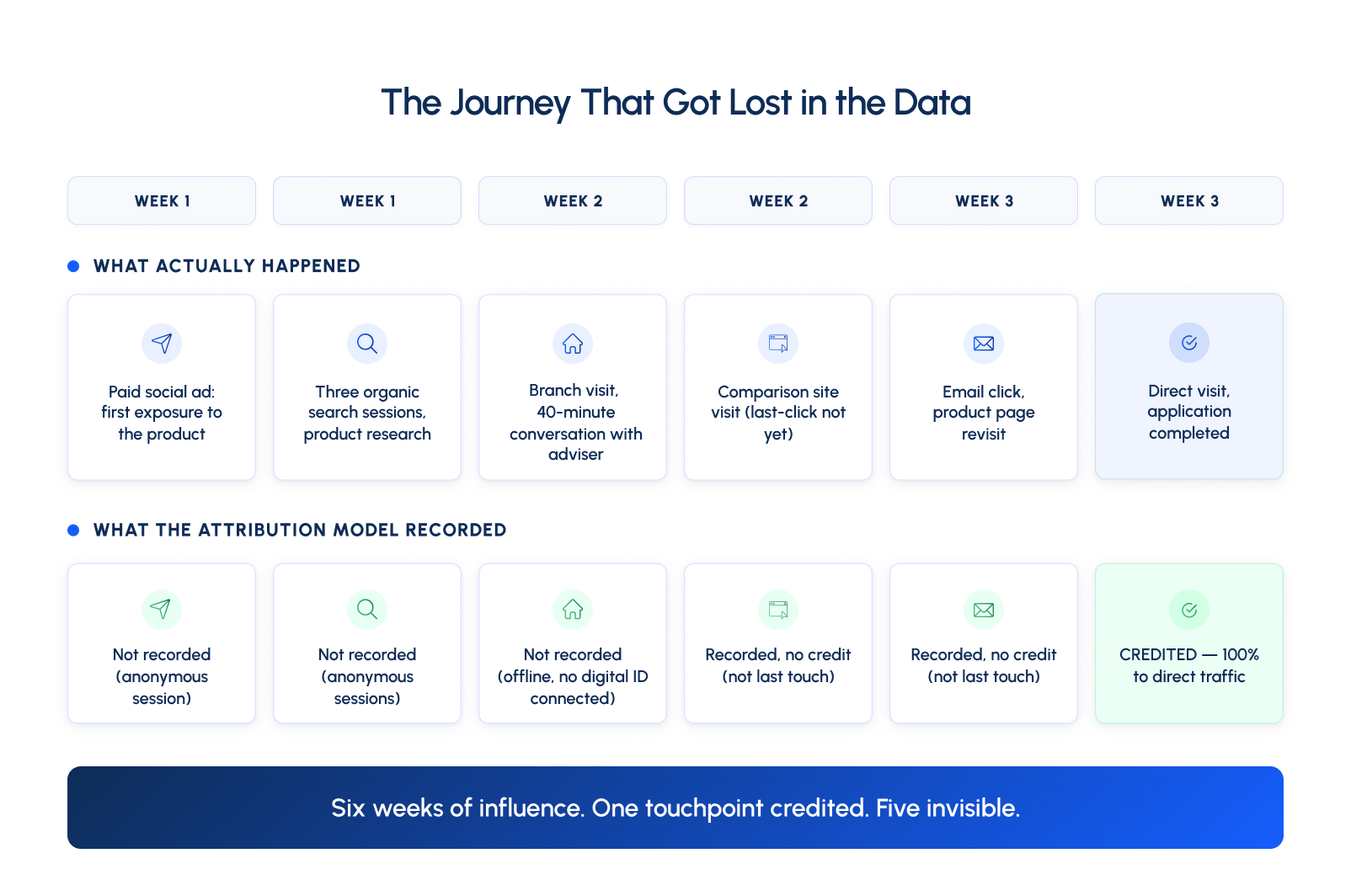
Every day, customers move between digital and physical touchpoints before they convert. And these attribution models record the final step and call it the full story. The channels that actually built the decision, the branch visit, the call centre conversation, and the weeks of online research, leave no trace in the model that determines where next month's budget goes.
Two things happen as a result:
- The wrong channels get funded. Budget concentrates in channels the model can see typically lower-funnel digital while the channels that built the purchase decision are systematically defunded.
- The right channels cannot justify their investment. Branches, call centres, and upper-funnel media cannot demonstrate their contribution to conversion because the measurement infrastructure was never built to capture it.
The result is a measurement framework that overcredits the channel present at the moment of transaction and ignores everything that preceded it. This is not a data quality problem. It is a data architecture problem and it compounds with every budget cycle that runs on an incomplete picture of how customers actually make decisions.
Where the Data Stops Following the Customer
Trace any broken omnichannel attribution problem far enough back and it leads to the same structural condition: customer journeys that cross a channel boundary the data infrastructure was not built to follow.
Digital systems track digital behaviour well. A customer's path across paid search, organic, social, email, and web sessions can be reconstructed with reasonable accuracy. What they cannot do by design, not oversight is follow a customer when they step away from a screen into a physical environment. The moment a customer walks into a branch, visits a store, or calls a contact centre, they disappear from the digital record. They reappear when they return to a digital touchpoint. Everything in between is a gap.
Offline systems face the same constraint in reverse.
Branch CRMs record visits. Contact centre platforms log calls. POS systems record transactions. None of these were built to ask what digital behaviour preceded the interaction they are recording. The customer crossed the boundary. The data did not.
Three specific failure points make this gap permanent rather than temporary:
- Identity breaks at the boundary - online behaviour is anonymous until authentication. Twelve sessions of research can precede a branch visit with no mechanism connecting them to the same person
- Systems hold the answer but do not share it - website analytics, CRM, branch system, call centre platform, and loyalty system each hold a piece of the journey. No system holds all of it
- The measurement model discards what it cannot see - last-click attribution assigns full credit to the final digital touchpoint. Everything before it digital or offline and receives nothing
What the Measurement Model Should Be Doing Instead
Last-click attribution survives not because it is accurate but because it is operationally convenient, it requires no identity resolution, no cross-system integration, and produces clean numbers. But in any cross channel attribution context, marketing attribution built on last-click is systematically wrong. And because the distortion is consistent and directional, the budget decisions built on top of it are consistently wrong in the same direction, cycle after cycle.
The distortion is directional and predictable:
| Channel Type | Attribution Status | Reality |
|---|---|---|
| Direct traffic/branded search | Overcredited | Captures intent created elsewhere not the origin of it |
| Retargeting | Overcredited | Present at end of journeys driven by earlier touchpoints |
| Paid social/display | Undercredited | Drives early awareness but rarely the last click |
| Organic/content | Undercredited | Consistently in early stages of high-value journeys |
| Branch/call centre/agent | Invisible | No digital record contribution never enters the model |
| Events/direct mail | Invisible | Offline influence with no digital identity connection |
The pattern this creates is self-reinforcing. Lower funnel channels receive more budget because they appear to drive more conversions. Upper-funnel and offline channels receive less because cross-channel attribution is not capturing their contribution.
Over time, the pipeline that feeds the lower funnel erodes and performance marketers find themselves spending more to acquire the same volume of conversions, without any data to explain why. The measurement model is not just misreporting the past. It is actively shaping a worse future.
Six weeks of influence shouldn't end in one credited click. Let's fix your attribution
A model fit for online offline attribution corrects this in three steps each dependent on the previous one.
Step 1 - Connect offline conversion tracking to the customer identity thread.
Branch visits, call centre logs, in-store consultations, and agent meetings need to be connected to the same customer identity that exists in digital systems. Store visit attribution and digital to store attribution only become possible when offline touchpoints are represented in the journey timeline alongside digital ones. Until that connection exists, no attribution model can account for the offline influence that preceded a digital conversion.
Step 2 - Replace last-click with data-driven multi-touch attribution.
Once offline interaction data is connected and identity is resolved across systems, the attribution model can distribute credit across the full influence path weighted by actual observed contribution, not proximity to transaction. The shift from last-click to data-driven attribution on connected data consistently produces materially different channel valuations and materially different budget recommendations.
Step 3 - Let the model inform budget decisions, not just validate them.
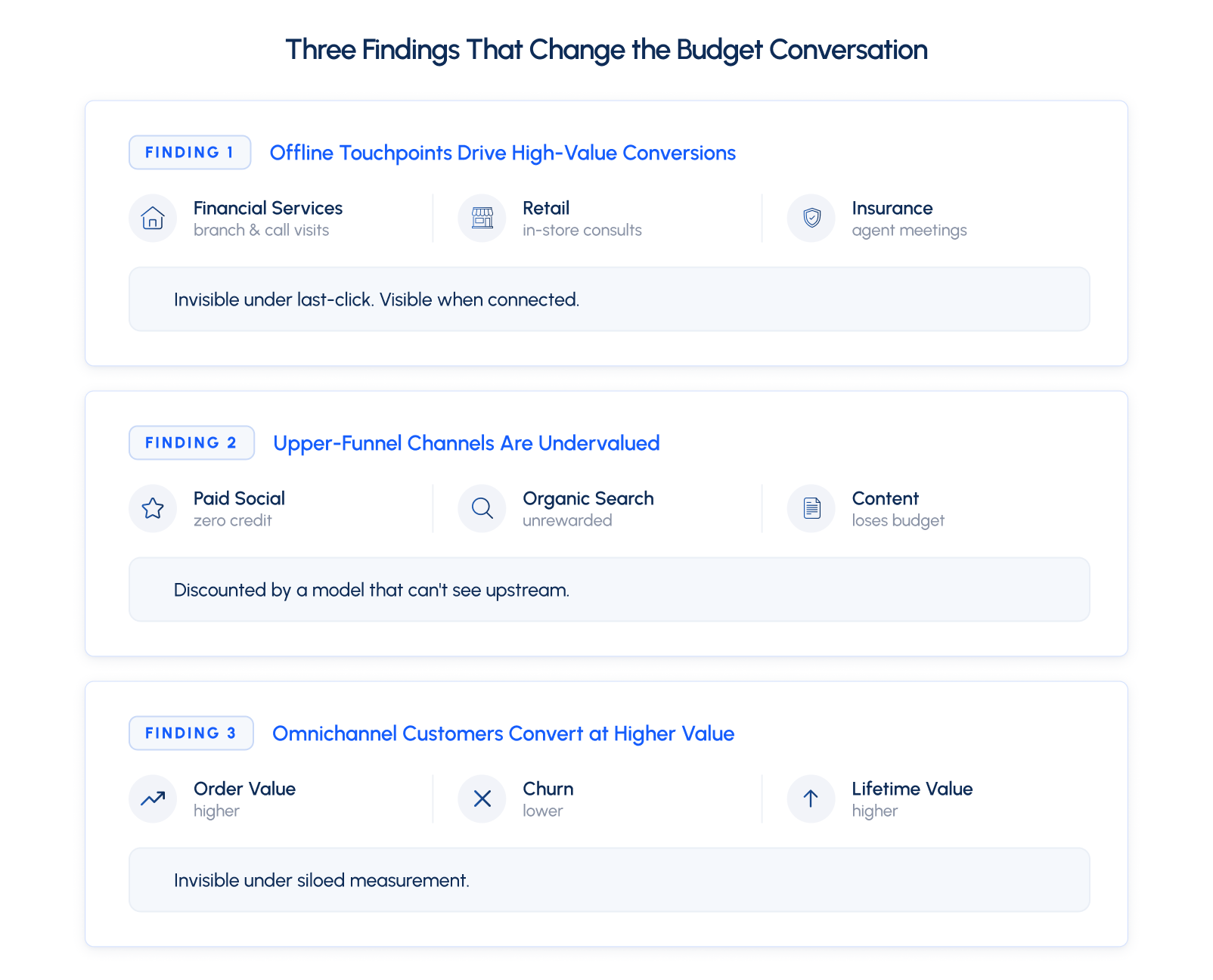
The output of a connected attribution model is not a better report. It is a different budget conversation. In financial services, where branch visits frequently precede high-value digital conversions, offline purchase tracking that connects branch interactions to subsequent digital completions consistently reveals that the channels appearing least productive in last-click models are among the most influential in practice. In retail, where in-store consultations drive online completions on big-ticket purchases, the model stops crediting direct traffic for decisions made in a store.
Upper funnel channels recover credit. Offline touchpoints become visible. Budget decisions change and they change in directions that typically improve both conversion rates and media efficiency.
Access a structured five-day sprint that identifies exactly where attribution is breaking in your stack and leaves you with a framework that can see the full journey.
How to Build a Model That Can See the Full Journey
The fix for broken omnichannel attribution is not a new analytics platform. It is a data architecture decision, one that determines whether the customer identity, journey data, and measurement model across an organisation's systems can be connected into a coherent attribution picture.
Four components determine whether that connection is possible.
- A persistent customer identity across systems. Attribution requires recognising the same customer across digital platforms, offline systems, and transactional records. Without a resolved identity that persists across the full journey, touchpoints cannot be assembled into a single timeline and attribution remains channel-bound.
- Data pipelines connecting operational systems to the measurement layer. Branch visits, call centre logs, in-store transactions, and agent interactions need to move from the systems that generate them into the environment where attribution is modelled. The architecture varies. The requirement does not.
- A multi-touch attribution model across the full influence path. Data-driven attribution distributes credit based on observed contribution, not proximity to transaction. The shift from last-click alone, on connected data, consistently produces materially different channel valuations and budget recommendations.
- A measurement output built to inform budget decisions. Connected attribution should answer the questions budgets depend on: which channels drive high-value conversions, which offline touchpoints precede digital completions, and where investment should move. A more granular report that does not change budget allocation has not solved the problem.
What Becomes Visible When the Data Is Connected
Organisations that have implemented connected, customer journey attribution, resolving identity across online and offline systems and applying multi-touch modelling to the complete journey data and consistently find the same categories of insight that were invisible under last-click models.
The Insight That Changes the Budget Conversation
The branch that was defunded contributed to more high-value digital conversions than any paid channel in the portfolio. The content team whose budget was cut was responsible for the first touchpoint in 40% of converting journeys. The call centre, treated as a cost centre, was the decisive influence in a disproportionate share of the highest-value product sales.
None of this appeared in the dashboard. Not because the data did not exist it did, distributed across four systems that never shared it. But because the measurement model in use was not designed to see across the channel boundary where the customer was actually making decisions.
The organisations that find this before a budget decision goes wrong ask a different question. Not which channel drove the last click but what their highest-value converting customers had in common across their full journeys. That question can only be answered when:
- Identity is resolved across digital platforms, offline systems, and transactional records
- Offline interactions are connected to the digital record in the same measurement environment
- The attribution model distributes credit across the full influence path not just the final touchpoint
When that infrastructure is in place, the data that was always there becomes actionable for the first time. Branches recognised as conversion drivers. Upper funnel channels are seen as the origin point of the highest value journeys. Offline touchpoints that were invisible in every dashboard become the most important variable in understanding why certain customer segments convert at higher rates and higher values than others.
The business impact is direct and measurable:
- Budget flows toward channels that build purchase decisions, not channels present at the moment of transaction as the core of marketing budget optimization done right
- Media plans change based on actual influence, not last-click proximity
- CAC improves not because spend increased but because a higher proportion of existing spend reaches the journeys that actually convert
- Channel investment is rebalanced based on what the full journey data shows not what a single-channel dashboard reports
Getting there requires three things done in sequence. A diagnostic audit that maps exactly where attribution is breaking, which system boundaries are losing the customer identity thread, which offline interactions are invisible to the measurement layer, and which budget decisions are most exposed to the distortion.
The data architecture work that closes those gaps connecting identity across systems, building pipelines that bring offline data into the measurement environment, and implementing multi-touch attribution on the connected data. And the ongoing measurement governance that keeps the model accurate as the stack evolves.
This is the work. It does not require a new platform. It requires the right diagnostic, the right architecture, and the right model applied to data that already exists in the organisation.
Kaviarasu S
Associate Content Writer
Xtelligence Inbox.
Your weekly dose of marketing smarts!
Related Posts