Interactions Correctly?


Tag Health vs. Measurement Health: Are You Tracking What Matters?


Know Your Tag Implementation Accuracy with Xerago TrueMeasure
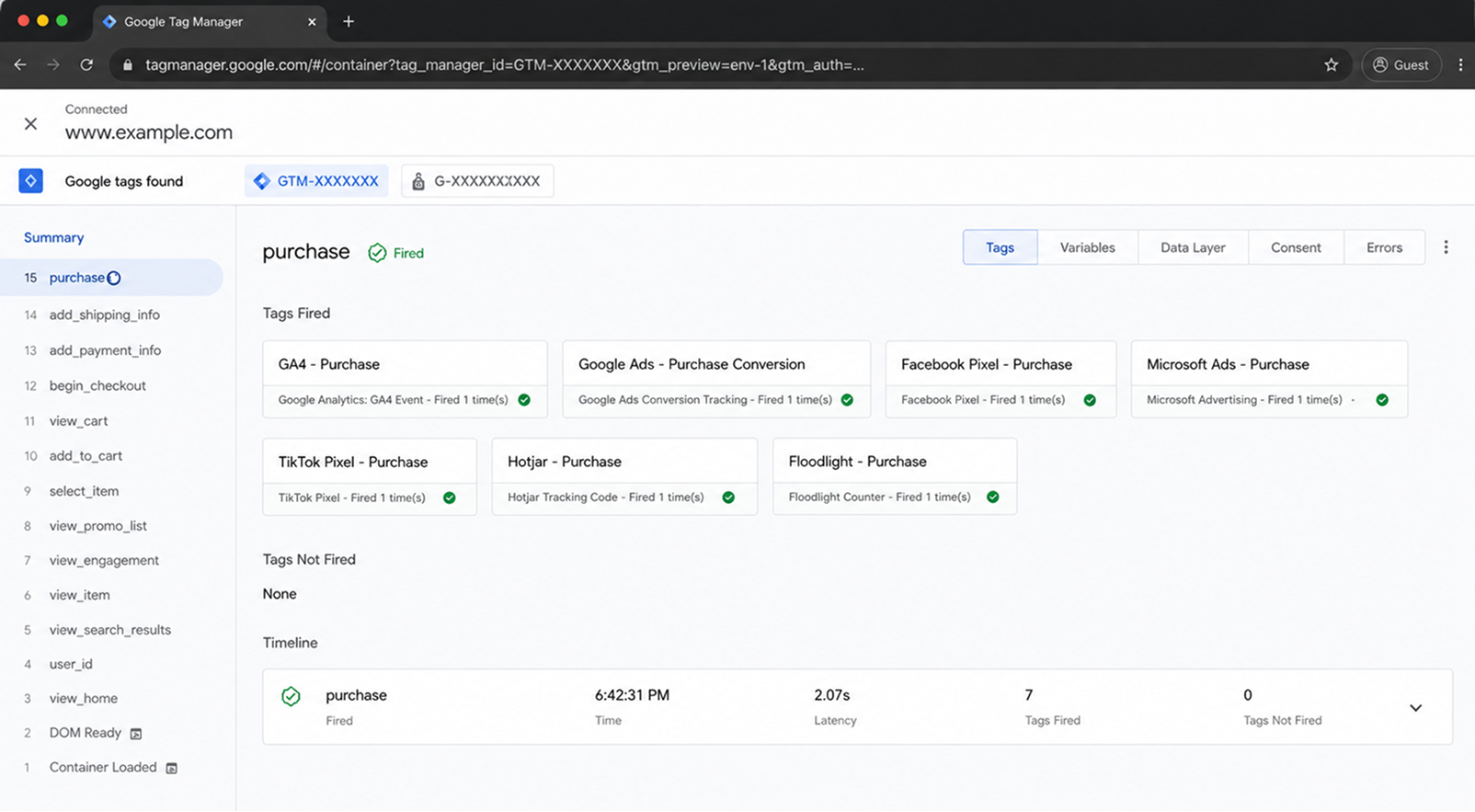
A tag has one job: to capture what actually matters. Firing successfully is not the same as measuring correctly.
Your tag manager can show green, your debugger can confirm the event, and QA can sign off on the tag implementation. None of that guarantees the data reflects the customer action or business outcome you intended to measure.
That distinction is what separates tag health from measurement health.
Tag health tells you whether the technical setup is working. Measurement health tells you whether the data being collected is accurate, meaningful, and useful for decision-making.
Key Takeaways:
- Tag validation confirms a tag fires. Measurement health confirms it's measuring the right thing,they are not the same check.
- A technically clean tag can still mislabel, miss, or waste an interaction without ever throwing an error.
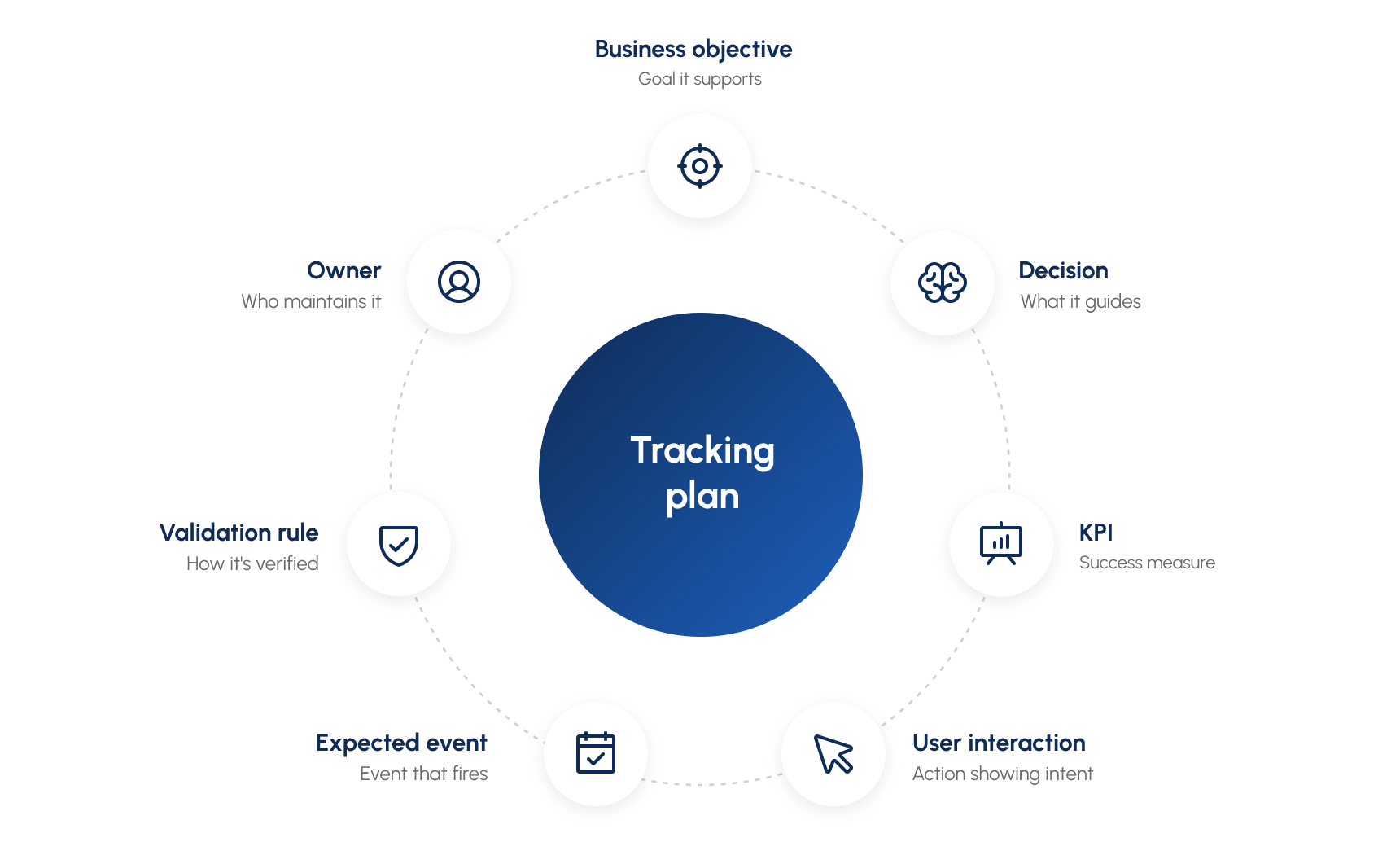
- Start every fix from the business decision, not the tag: objective → decision → KPI → interaction → event → validation rule → owner.
- Any event that can't be traced through that full chain is incorrectly measured, missing, or not useful.
- Six tests for intent, coverage, correctness, utility, resilience, and accountability separate a healthy tag from healthy measurement.
- Fix one high-value journey first. It's usually enough to reveal whether the rest of the digital estate needs the same scrutiny.
Tag Health and Measurement Health Are Not the Same Thing
Tag health asks: is the code present, loading, and firing without errors? Measurement health asks something harder: does what fired actually mean what you think it means, is it complete, is anyone using it, and will it still be true after the next release?
You can have perfect tag health and broken measurement health at the same time. A tag can fire flawlessly, with no duplicates and no console errors, while recording the wrong interaction entirely.
Most analytics QA processes stop at tag health. They confirm the network call was fired and the payload isn't malformed. That's necessary. It is not sufficient.
| Section | Tag Health | Measurement Health |
|---|---|---|
| Core question | Is the tag present and firing? | Does the data reflect business intent? |
| What it catches | Missing tags, duplicate fires, load errors, timing issues | Mislabeled events, uncaptured journeys, unused signals, drift after releases |
| Typical owner | Developer or tag manager admin | Analytics lead, with business stakeholders |
| Fails silently | Rarely as errors surface in the debugger | Constantly a "healthy" tag can still measure the wrong thing |
A broken tag announces itself. A tag that's technically healthy but measuring the wrong thing announces nothing, it just sits there, green, feeding a report someone will build a decision on.
Four Ways Healthy Tracking Produces Bad Measurement
A tag can hit every technical checkbox and still misrepresent what happened on the page. These are illustrative patterns, not client-reported figures; the pattern matters here, not a number.
A tag fires under the wrong interaction. A video play gets recorded as a form submission, because both actions share a trigger condition set up during an earlier campaign. The tag fires exactly as configured. It just isn't measuring what the report says it's measuring.
A meaningful journey step is never captured. A form abandonment, an OTP screen causing drop-off, a checkout step users quietly exit, none of these register an error, because no tag was ever built to watch for them. The interaction happened. The measurement framework never accounted for it.
An event is collected correctly but never used. Scroll depth tracks faithfully on every page. Video completion rates populate the backend. Nobody pulls either into a report. The implementation is accurate and functionally idle.
A release changes the experience without updating the measurement design. A redesign ships, button IDs change, a checkout step gets removed, a component gets replaced. The original tags may still fire, but against an experience that no longer matches what they were built to measure.
In our experience, this fourth failure mode is the most common and the hardest to catch, because nothing breaks. The tag still fires. It's just measuring a version of the product that no longer exists.
Not sure which side of this your tracking falls on?
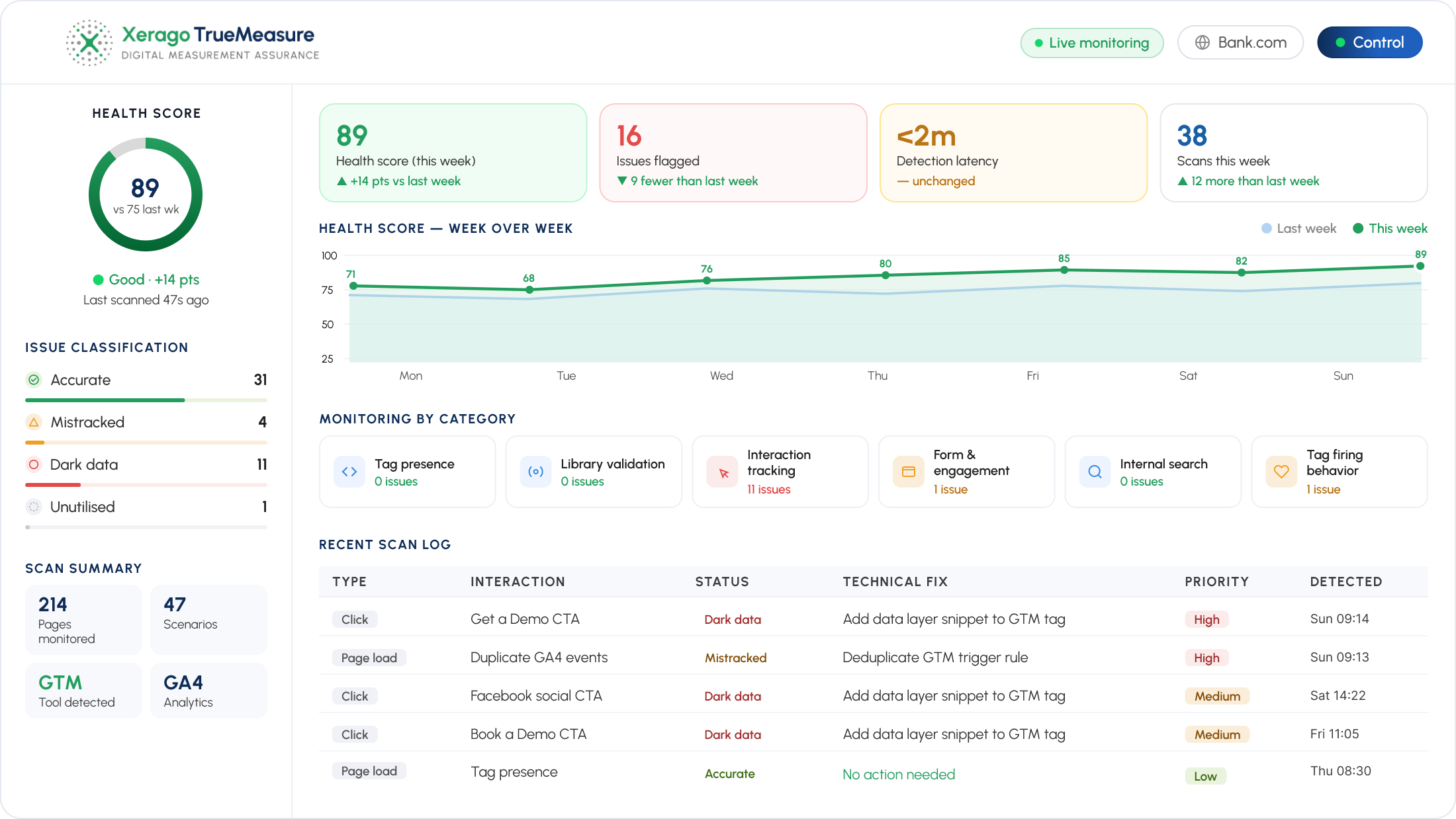
Xerago TrueMeasure scans your implementation against business intent and shows you exactly where the gap sits.
Every Tag Should Trace Back to a Business Decision
Instead of auditing tags and hoping they map to something useful, start from the decision the business actually needs to make, and work backward through the chain that has to hold for that decision to be trustworthy:
Take a checkout redesign as an example. The team wants to reduce abandonment. But "reduce abandonment" isn't an event and it's a decision waiting for a chain of evidence underneath it.
- What decision must this data support? A budget reallocation, a checkout redesign, a retention campaign.
- What KPI informs that decision? Conversion rate, cost per acquisition, drop-off rate at a specific step.
- What user behavior provides evidence for that KPI? Completing checkout, abandoning a form, replaying a product video.
- What event represents that behavior? The specific tag, trigger, and data layer variable that should fire.
- What proves the implementation is valid? The rule that confirms the event fires correctly, on the right interaction, every time.
Validate every important event against the business decision it is supposed to support. Any event that cannot be traced back through that full chain is either incorrectly measured, missing, or simply not useful.
A Practical Measurement-Health Framework
Six things have to be true simultaneously for a piece of tracking to count as genuinely healthy.
Intent: Is the event tied to a defined business objective, or just something someone once thought might be useful? If nobody can name the decision an event exists to inform, that event isn't measurement, it's exhaust. It got instrumented because someone thought it might be useful someday, and "might be useful someday" is exactly how a warehouse fills up with data nobody can defend in a business review.
Coverage: Are all journey steps that affect the KPI captured, including failure and abandonment paths? The easy steps to track are usually the successful ones: the click, the submit, the purchase. The steps that actually explain why a KPI is moving are the ones people abandon, retry, or fail at, and those are precisely the steps teams skip because they're harder to instrument.
Correctness: Does the event represent what actually happened, or has it drifted from its original definition? This is the gap between a tag that fires and a tag that fires on the right thing, at the right moment, with the right parameters attached. A video-play event mislabeled as a conversion is technically present and functionally wrong.
Utility: Is the signal used in a report or decision, or collected and ignored? An event can be flawlessly correct and still be dead weight if it never touches a dashboard anyone opens or a decision anyone makes. Utility is the dimension teams forget to check, because it isn't a technical question at all.
Resilience: Does it keep firing correctly after a release or redesign, or does it silently break? A redesign, a new checkout flow, a rebrand—any of these can leave an event technically firing while the thing it was built to represent has quietly stopped existing in the form the definition assumes. Resilience means the measurement design gets revisited every time the product does.
Accountability: Is there a named owner and a validation trail showing when it was last checked? Unowned measurement degrades exactly as fast as anything else nobody is responsible for, and by the time the decay is visible in a report, nobody can say how long it's been wrong.
How to Audit Measurement Health
Starting with one business-critical journey, not the whole site trying to cover the whole site at once is exactly how this work quietly reverts back into tag-health work.
Pick the journey that actually moves a number leadership cares about, and go deep on that one first. Map that journey's decisions, KPIs, interactions, events, and owners against each other, and be honest about where the chain has gaps.
Test the successful path, the failed path, the abandoned path, and the edge cases. It's tempting to only test the happy path, because that's the one that's easy to reproduce and the one stakeholders actually watch. But the abandoned path is usually where the real gaps live from abandonment, cart abandonment, the step where someone almost converted and didn't. If that path isn't instrumented, the business is blind to exactly the behavior it most needs to understand.
Compare what you intended to collect against what's actually being collected. Write the intended list first, independent of what's currently implemented, then pull the actual event log for that journey and set the two side by side.
Prioritize what you find by business impact, not by what's easiest to fix. A missing event on a low-traffic page can wait. A miscounted event feeding a KPI in the executive dashboard cannot.
Validate the corrections after they deploy. A measurement-health audit that happens once is a snapshot, and snapshots go stale the moment the next redesign ships, which is precisely how technically healthy tracking quietly drifts back into the unhealthy measurement this whole exercise was meant to catch.
Where Measurement Assurance Fits
Analytics platforms analyze the data they're handed. Tag managers deploy whatever configuration you build. Neither one checks whether that configuration reflects business intent in the first place, that's a distinct layer of work, and it's the layer most organizations have left unowned, assuming it was somebody else's job or no job at all.
This is the layer TrueMeasure exists for. It doesn't replace your analytics platform, your tag manager, your attribution model, or your MMM; it sits alongside them, scanning implementations against business intent, surfacing what's missing, incorrect, or collected and never used, and prioritizing fixes by business impact rather than technical convenience. Approved fixes get made. Nothing changes without customer sign-off. See how TrueMeasure verifies measurement against business intent.
For digital analytics teams specifically, this closes the exact gap this piece opened with: they're usually the ones asked to explain a discrepancy after it's already reached a stakeholder, not the ones who caught it first. See how TrueMeasure verifies measurement against business intent.
Related FAQs
Is tag health the same as data accuracy?
No. Tag health confirms a tag fired without errors. Data accuracy asks whether what fired actually represents the right interaction. A tag can pass every technical check and still be measuring the wrong thing.
How often should measurement health be audited?
Tag health gets checked on every release. Measurement health needs a deliberate cadence, tied to redesigns or major campaign shifts, since drift here doesn't throw errors. Quarterly, starting with your highest-value journey, is a reasonable baseline.
Can an analytics platform catch measurement health issues on its own?
No. It reports on whatever data reaches it a mislabeled event looks identical to a correct one from inside the platform. That validation has to happen at the implementation layer, before the data reaches the report.
Who should own measurement health?
Tag health is usually owned by a developer or tag manager admin. Measurement health needs a named owner, typically an analytics lead working with business stakeholders, since validating intent takes context a developer alone won't have.
Kaviarasu S
Associate Content Writer
Xtelligence Inbox.
Your weekly dose of marketing smarts!
Related Posts


Xerago TrueMeasure
Google Tag Diagnostics Tool Doesn't Validate Measurement Health. Here's Why