Interactions Correctly?


Bad Data In, Bad Data Out. CDP Integration Is the Difference Between Insights and Noise.


Modernize Your CDP to Transform Your Business

That’s a staggering number. Imagine trying to assemble a puzzle with half the pieces missing—it’s frustrating, ineffective, and a waste of time. That’s exactly what happens when businesses operate with disconnected data.
CDP integration is the missing link. Done right, it stitches together data from CRM systems, e-commerce platforms, marketing automation tools, and other sources to create a single, unified customer profile.
The result? Smarter campaigns, hyper-personalized experiences, and a serious boost in ROI.
This guide breaks down everything you need to know about CDP integration—from core principles and best practices to the latest trends shaping the future of customer data integration and management.
Whether you’re evaluating a CDP for the first time or optimizing an existing setup, mastering integration is the difference between data chaos and marketing success.
What is CDP Integration and Why Does It Matter?
CDP integration is the process of seamlessly connecting a Customer Data Platform with various data sources, marketing tools, and business systems to establish a real-time, unified customer profile.
Think of it as the brain of your marketing ecosystem, processing, organizing, and activating customer data across every channel.
Key Components of CDP Integration:
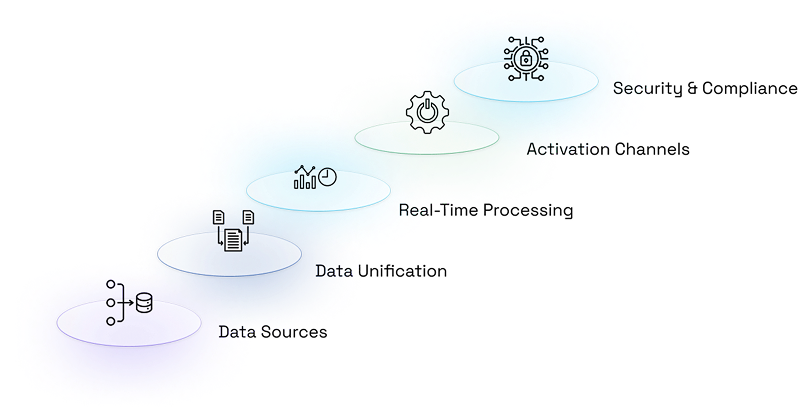
- Data Sources: Aggregating customer information from CRM systems, web analytics, e-commerce platforms, and offline channels.
- Data Unification: Cleaning, deduplicating, and merging data to form comprehensive customer profiles.
- Real-Time Processing: Ensuring immediate reflection of customer interactions within the system.
- Activation Channels: Integrating with marketing automation tools, email platforms, and social media channels.
- Security & Compliance: Adhering to data protection regulations such as GDPR and CCPA.
Without seamless cdp data integration, data silos persist—hindering personalization efforts and limiting the effectiveness of marketing strategies.
A well-integrated CDP ensures that every customer touchpoint is informed by accurate, real-time data, enhancing both engagement and long-term loyalty.
Choosing the Right CDP for Your Business
At Xerago, we categorize Customer Data Platforms (CDPs) based on their core functionalities and strategic impact, ensuring enterprises select a solution that aligns with their business goals and MarTech maturity.
Rather than a one-size-fits-all approach, we classify CDPs into five distinct types, each designed to solve specific challenges in customer data management and activation.
Comparative Analysis of CDP Types
To help you choose the right CDP for your business, we have compared the five types based on key evaluation criteria.
| Criteria | Data Aggregation CDP | Analytics-Driven CDP | Engagement-Oriented CDP | Marketing Cloud-Integrated CDP | Industry-Specific CDP |
|---|---|---|---|---|---|
| Primary Function | Data unification | Advanced analytics | Real-time engagement | Seamless marketing cloud integration | Industry compliance & insights |
| Best For | Organizations with fragmented data | Enterprises needing actionable intelligence | Brands focusing on omnichannel engagement | Businesses using full-stack marketing clouds | Highly regulated industries |
| Key Features | Identity resolution, data normalization, data cleansing | AI-driven segmentation, CLV modeling, predictive insights | Cross-channel orchestration, real-time triggers | Pre-built connectors, AI-assisted decisioning | Pre-configured data models, industry governance |
| Business Impact | 360-degree customer view, enhanced analytics | Precision targeting, optimized marketing ROI | Increased engagement, higher conversions | Efficient automation, enhanced personalization | Faster implementation, regulatory compliance |
| Notable Solutions | Twilio Segment, mParticle, BlueConic | Adobe Real-Time CDP, Tealium AudienceStream, Lexer | HCL CDP, Optimove, Simon Data | Salesforce Data Cloud, Oracle Unity, SAP CDP | Differs based on requirements |
1. Data Aggregation CDP (Data Unification CDP)
If your organization struggles with fragmented data silos, a Data Aggregation CDP is the foundation you need. It collects, cleanses, and unifies customer data from multiple sources, ensuring you have a single, reliable view of your customers. With features like identity resolution, data normalization, and cleansing, this CDP enhances analytics and reporting accuracy. It’s a must-have for effective cdp data integration.
Solutions like Twilio Segment, mParticle, and BlueConic make it easier to streamline data consolidation and drive deeper insights.
2. Analytics-Driven CDP
For enterprises seeking actionable intelligence, an Analytics-Driven CDP goes beyond data collection. It employs AI-powered segmentation, customer lifetime value (CLV) modeling, and predictive insights to deliver precise targeting strategies.
By optimizing marketing ROI through data-driven decision-making, businesses can anticipate customer needs and personalize engagement effectively.
Popular tools like Adobe Real-Time CDP, Tealium AudienceStream, and Lexer combine powerful analytics with seamless cdp integrations to enhance performance.
3. Engagement-Oriented CDP (Activation CDP)
Brands focusing on omnichannel engagement need an Engagement-Oriented CDP. This type enables real-time, personalized customer interactions through cross-channel orchestration, real-time triggers, and event-based automation.
The result? Higher conversion rates and enhanced customer experiences. Companies like HCL CDP, Optimove, and Simon Data specialize in delivering seamless activation, ensuring that every customer touchpoint is meaningful and timely.
4. Marketing Cloud-Integrated CDP
If your enterprise relies on a full-stack marketing cloud, a Marketing Cloud-Integrated CDP is your best choice. These platforms natively connect with existing marketing tools, utilizing AI-assisted decisioning and journey orchestration to maximize efficiency.
With seamless automation and enhanced personalization, solutions such as Salesforce Data Cloud, Oracle Unity, and SAP CDP help businesses fully leverage their MarTech investments.
5. Industry-Specific CDP
Industries with strict regulatory and personalization requirements need a tailored approach. An Industry-Specific CDP provides pre-configured data models, industry-compliant data governance, and AI-powered personalization to meet sector-specific demands.
Based on specific industry requirements, you can choose any of the above mentioned CDPs. If you're unsure on where to start, contact Xerago for free consultation.
Key Challenges Businesses Face with CDP Integration
Customer Data Platforms (CDPs) promise a single source of truth for customer insights, yet integrating them isn’t always a walk in the park.
Organizations often hit roadblocks that delay implementation, inflate costs, and limit the impact of the platform. Let’s break down the biggest hurdles in cdp data integration—and how to overcome them.
1. Data Silos
Many organizations operate with data dispersed across multiple systems—such as CRM platforms, web analytics tools, and offline databases—leading to fragmented customer views.
Without unified data, delivering personalized and consistent customer experiences becomes nearly impossible. This is one of the most common pitfalls in failed cdp integrations.
CDP integration solves this by stitching together all customer touchpoints into a single, actionable profile, fueling better segmentation and stronger personalization.
2. Integration Complexity
Most enterprises operate on a patchwork of legacy systems, each with its own data structures and protocols. Integrating a CDP into this ecosystem can feel like assembling IKEA furniture—complicated instructions, mismatched parts, and plenty of frustration.
Successful cdp integrations require flexible architecture, robust APIs, and middleware support to ensure scalability and reliability.
3. Data Quality Issues
A cdp is only as good as the quality of the data it ingests. If your inputs are inconsistent, duplicated, or incomplete, your outputs—segmentation, recommendations, campaign decisions—will be flawed.
Think of it like cooking with spoiled ingredients: no matter how great the recipe, the result won’t be palatable.
A strong cdp integration strategy includes cleansing pipelines, validation rules, and automated deduplication to maintain clean, usable data.
4. Compliance Risks
Navigating the complex landscape of data privacy regulations, such as GDPR and CCPA, is a critical aspect of CDP integration. Non-compliance can result in substantial fines and damage to the organization's reputation.
5. Real-Time Processing Constraints
Customers expect interactions that are relevant in the moment—not hours or days later. But enabling real-time data integration across systems is technically complex and resource-heavy.
To meet this demand, businesses must invest in cdp integrations that support streaming data, event-based triggers, and low-latency processing making personalization instant and meaningful.
How CDP Integration Enhances Customer Data Management
Effective CDP integration optimizes data accuracy, improves accessibility across departments, and ultimately drives better marketing outcomes. Below are the core ways CDP integration enhances customer data management.
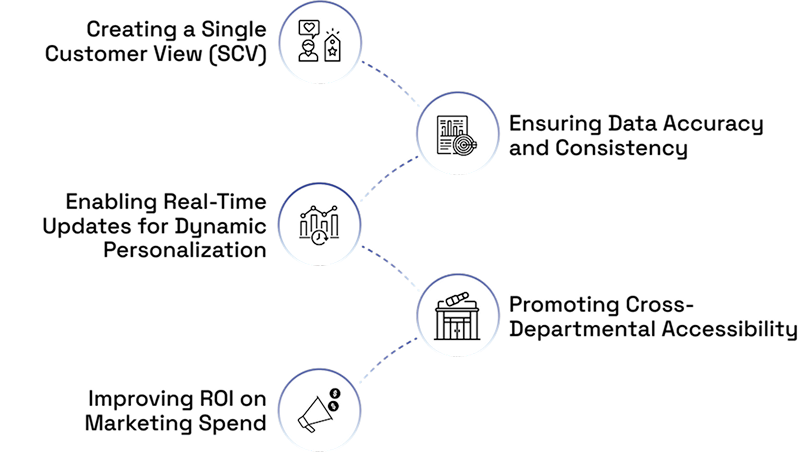
1. Creating a Single Customer View (SCV)
A Single Customer View (SCV) solves the problem of fragmented customer data. A Single Customer View (SCV) merges interactions across touchpoints—email, social media, in-store visits, call centers, and website behavior—into one unified profile per customer.
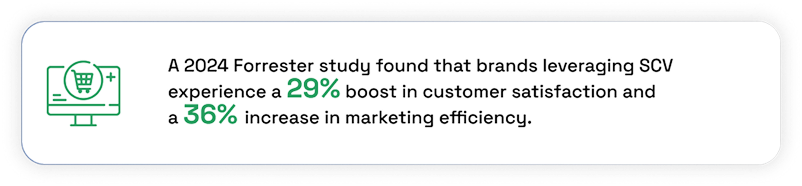
The reason? They tailor experiences based on a holistic, 360-degree view of each customer, making personalization more precise and impactful.
2. Ensuring Data Accuracy and Consistency
Messy data leads to missed opportunities. AI-powered CDPs act as vigilant data custodians, continuously scanning for errors and standardizing formats across systems.
- Error Elimination: CDPs validate and correct inconsistencies in addresses, phone numbers, and transaction histories.
- Data Unification: Integration harmonizes disparate data formats (e.g., CRM field variations) into a standardized schema.
- Profile Enrichment: CDPs fill in missing details by integrating third-party data, enhancing customer profiles with demographic insights.
3. Enabling Real-Time Updates for Dynamic Personalization
If a user abandons their cart, they anticipate a reminder email within minutes, not days. However, without seamless CDP integration, most businesses struggle to process and act on behavioral data in real time.
If a customer engages with a product page but doesn’t purchase, the CDP can trigger an immediate retargeting ad or follow-up email. This facilitates real-time personalization and product recommendations
4. Promoting Cross-Departmental Accessibility
Customer data is not just for marketers. Sales, support, and product teams all benefit from having a unified view of customer interactions.
- Sales Teams: Gain access to behavioral insights (e.g., website visits, past purchases) to tailor their pitch and close deals faster.
- Customer Support: Has real-time context on past interactions, preventing customers from repeating their issues every time they call.
- Product Development: Understands customer preferences and pain points based on real usage data, leading to better product innovation.
5. Improving ROI on Marketing Spend
CDP integration directly impacts marketing efficiency by optimizing targeting and reducing wasted ad spend. When data is fragmented, businesses waste their budget on irrelevant ads, duplicate messaging, or poorly timed outreach.
By improving targeting precision, CDP integration ensures every marketing dollar is spent efficiently, leading to higher engagement and stronger customer relationships.
By segmenting audiences based on real-time behavior, marketers can craft highly relevant offers that drive engagement.
Core Principles of Integrating a CDP
A well-integrated Customer Data Platform (CDP) isn’t just a data warehouse—it’s the beating heart of a modern marketing strategy. When executed correctly, it ensures data accuracy, accessibility, and actionability across marketing, sales, and customer service teams.
But without a solid integration framework, a CDP can quickly turn into a data swamp—disorganized, unreliable, and impossible to navigate. Here’s how to build a CDP integration that scales with evolving customer needs.
1. Unified Data Architecture
- Single Source of Truth: All customer data must flow into the CDP from various sources (web analytics, CRM, POS, and social platforms) without duplication.
- Schema Mapping & Standardization: Ensure consistency in naming conventions and data structures across different systems.
2. Real-Time & Batch Data Processing
- Real-Time Sync: Enables instant data activation for personalized marketing.
- Batch Processing for Historical Data: Bulk data loads allow businesses to enrich customer profiles over time.
3. Interoperability with Martech Stack
- APIs & Webhooks: Must support seamless API-based integrations with third-party tools (e.g., ESPs, DMPs, and analytics platforms).
- ETL & Reverse ETL Pipelines: Critical for transforming, loading, and retrieving data as needed.
4. Identity Resolution & Persistent Customer Profiles
- Deterministic & Probabilistic Matching: Ensures accurate identification of customers across multiple touchpoints.
- Cross-Device & Omnichannel Consistency: Maintains a holistic view of customer behavior.
5. Compliance & Security-First Approach
- GDPR, CCPA, HIPAA Compliance: Enforce strict governance policies to protect customer privacy.
- Role-Based Access Control (RBAC): Ensure only authorized personnel access sensitive customer data.
Key Systems and Tools for CDP Integration
Integrating a Customer Data Platform (CDP) into your existing infrastructure is a strategic imperative for businesses aiming to harness unified customer insights.
This integration ensures that disparate data sources coalesce into a single, actionable customer view, driving personalized marketing and enhanced customer experiences. To achieve this, selecting the appropriate systems and tools is paramount.
Choosing the Right CDP Integration Tools
Selecting the appropriate integration tools is critical for the successful deployment of a CDP. These tools must efficiently handle data ingestion, transformation, and synchronization across various platforms. Key considerations include scalability, compatibility with existing systems, and real-time processing capabilities.
According to Gartner Peer Insights, leading data integration tools favored by industry professionals include:
| Tool Name | Description |
|---|---|
| AWS Glue | A fully managed ETL service that makes it easy to prepare and load data for analytics. |
| Informatica PowerCenter | Provides comprehensive data integration capabilities to connect and fetch data from diverse sources. |
| Fivetran | Offers automated data integration, delivering ready-to-use connectors that adapt to source changes. |
| Talend Data Fabric | Combines data integration, integrity, and governance in a single platform. |
| Microsoft Azure Data Factory | A cloud-based data integration service that orchestrates and automates data movement and transformation. |
These tools are renowned for their robust performance and have been rated highly by users for their reliability and scalability.
Leading Data Integration Software for CDPs
The backbone of a successful CDP integration lies in robust data integration software capable of handling complex data workflows. These solutions ensure that data from various sources is accurately combined, cleansed, and made analytics-ready.
Top-rated data integration software includes:
| Software Name | Description |
|---|---|
| Denodo Platform | Offers data virtualization to integrate data in real-time without physical replication. |
| SnapLogic Platform | Provides an AI-powered integration platform as a service (iPaaS) for connecting applications and data. |
| MuleSoft Anypoint Platform | Simplifies the process of linking data across different systems, facilitating cohesive integration. |
| WSO2 API Manager | An open-source API management solution that enables integration and management of APIs across the enterprise. |
These solutions are recognized for their ability to handle large-scale data integration projects, ensuring that CDPs function optimally within the enterprise ecosystem.
Understanding API-Based Integrations for CDPs
Application Programming Interfaces (APIs) play a pivotal role in the integration of CDPs with other systems. API-based integrations facilitate real-time data exchange, ensuring that customer profiles are continuously updated with the latest information.
Key aspects of API-based CDP integrations include:
- Real-Time Data Synchronization: APIs enable immediate data updates, ensuring that customer information is current across all platforms.
- Scalability: API integrations can handle increasing data volumes and user requests without compromising performance.
- Flexibility: They allow for the seamless addition of new data sources and destinations as business needs evolve.
- Security: APIs offer controlled access to data, ensuring that only authorized systems and users can interact with sensitive customer information.
Implementing API-based integrations requires a strategic approach, including the selection of robust API management tools. According to Gartner Peer Insights, leading API management solutions include:
| Tool Name | Description |
|---|---|
| Postman API Platform | Simplifies the process of building APIs and encourages collaboration among developers. |
| Apigee API Management (Google) | Provides a comprehensive platform for developing, securing, and scaling APIs. |
| Microsoft Azure API Management | Enables organizations to publish, secure, and analyze APIs in a scalable environment. |
| Kong Gateway | Offers an open-source API gateway that facilitates microservices and API management. |
These tools assist in designing, deploying, and monitoring APIs, ensuring that CDP integrations are efficient, secure, and scalable.
Best Practices for Seamless CDP Integration
Integrating a Customer Data Platform (CDP) is a strategic move that can revolutionize how your business understands and engages with customers. To ensure a seamless integration, follow these best practices:
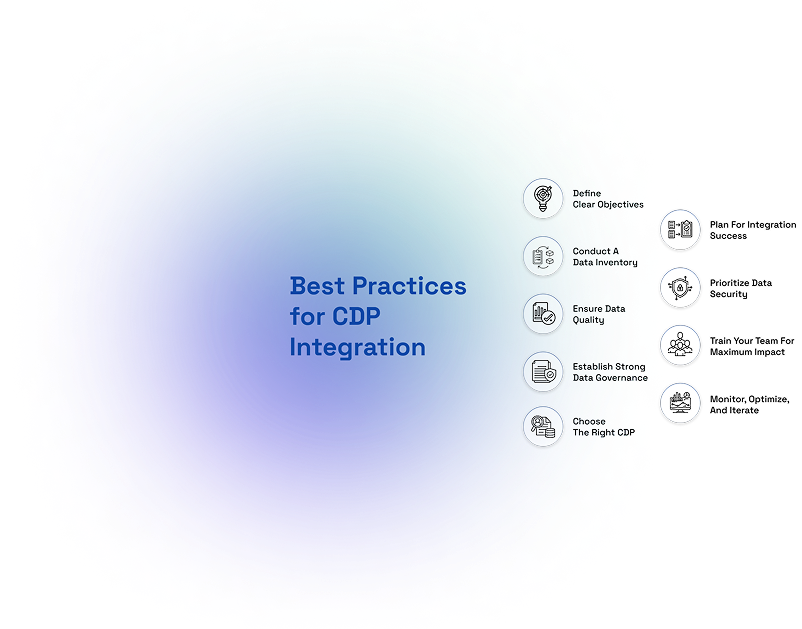
1. Define Clear Objectives
Before diving into integration, take a step back and ask: What do we want to achieve? Whether it's hyper-personalized marketing, better audience segmentation, or a unified customer view, clearly defined goals will shape your integration strategy and help measure success.
2. Conduct a Data Inventory
Your CDP is only as good as the data it ingests. Conduct a thorough audit of all customer data sources—CRM, e-commerce platforms, mobile apps, social media, and even offline interactions. Mapping out these data touchpoints ensures nothing falls through the cracks and minimizes integration headaches later.
3. Ensure Data Quality
Data-driven decisions are only as reliable as the data itself. Implement strict cleansing protocols to remove duplicates, correct inaccuracies, and standardize formats. A high-quality data foundation strengthens the accuracy and value of every cdp integration.
4. Establish Strong Data Governance
Who owns the data? Who can access it? How should it be used? A well-defined data governance framework answers these questions and ensures compliance with regulations like GDPR and CCPA. Set up clear policies for data ownership, security protocols, and user permissions to maintain trust and integrity.
5. Choose the Right CDP
Not all CDPs are created equal. Selecting the right platform requires evaluating factors like scalability, ease of integration, analytics capabilities, and support for AI-driven insights. The best CDP is one that seamlessly integrates with your existing tech stack and evolves with your business needs.
6. Plan for Integration Success
Integration isn’t just a technical challenge—it’s a cross-functional initiative. Develop a detailed roadmap with timelines, resource allocations, and milestones. Engage stakeholders from IT, marketing, and sales early on to ensure alignment and smooth execution.
7. Prioritize Data Security
With great data comes great responsibility. Implement robust encryption, access controls, and monitoring mechanisms to protect customer data. Stay compliant with evolving privacy laws and regularly update security protocols to mitigate risks.
8. Train Your Team for Maximum Impact
A CDP is only as powerful as the people using it. Provide hands-on training, create user-friendly documentation, and establish a support system to ensure teams across departments can leverage its full potential.
9. Monitor, Optimize, and Iterate
The job isn’t done once the CDP is integrated. Define key performance indicators (KPIs) to track its impact on customer engagement, marketing efficiency, and revenue growth. Regularly review these metrics, gather feedback, and refine your strategy to keep optimizing for success.
By adhering to these best practices, your business can successfully integrate a CDP, leading to enhanced customer insights and more personalized marketing strategies.
CDP integration is no longer optional—it is a necessity. Businesses that fail to integrate their CDP effectively will struggle with fragmented customer experiences and wasted marketing budgets.
- Ensure your CDP connects seamlessly with marketing, sales, and analytics platforms.
- Data privacy regulations are evolving; your integration strategy must keep pace.
- Future-proof your marketing with machine learning and instant data activation.
FAQ
1. How is a CDP different from a CRM or DMP?
A Customer Data Platform (CDP) goes far beyond what traditional CRMs or DMPs can deliver. While a CRM focuses on managing known customer interactions—mainly for sales and support—a CDP ingests data from multiple systems (CRM, web analytics, POS, social) and unifies it into a single customer view in real time.
DMPs, on the other hand, are designed for anonymous third-party data used in ad targeting. They’re session-based and cookie-reliant, whereas a CDP integration supports persistent profiles and first-party data. That’s why cdp integrations are central to long-term personalization and customer lifecycle management.
2. What are the real-world use cases of CDP integration in marketing?
CDP integration empowers marketers to activate data across every touchpoint. Use cases include:
- Real-time personalization: Triggering offers based on recent behavior
- Omnichannel orchestration: Syncing messaging across email, SMS, and social
- Churn prediction: Using behavioral data to flag at-risk customers
- Audience segmentation: Building dynamic segments with up-to-the-minute updates
- Journey retargeting: Delivering contextual ads or reminders after cart abandonment
When your cdp data integration is done right, it transforms your data into real-time, revenue-driving actions.
3. How do you evaluate the best CDP for your business needs?
The best customer data platform depends on your goals, MarTech stack, and data maturity. Start by identifying whether you need:
- Data unification (Data Aggregation CDP)
- Advanced analytics (Analytics-Driven CDP)
- Cross-channel orchestration (Engagement-Oriented CDP)
- Native marketing cloud compatibility (Cloud-Integrated CDP)
- Compliance-driven features (Industry-Specific CDP)
A robust cdp integration strategy ensures that the platform connects smoothly with your existing CRM, e-commerce, analytics, and campaign tools. Prioritize scalability, real-time capabilities, and compliance support.
4. What are the top challenges in CDP implementation and how can they be solved?
The biggest blockers in CDP implementation include:
- Data silos: Solved with comprehensive cdp data integration from all channels
- Poor data quality: Fixed through cleansing, deduplication, and schema mapping
- Integration complexity: Requires flexible APIs and ETL pipelines
- Compliance risks: Handled with built-in governance for GDPR, CCPA, and more
- Real-time lag: Addressed via event-based systems and low-latency syncs
Overcoming these starts with choosing a CDP that aligns with your architecture and ensuring your cdp integrations are well-structured from the start.
5. Can a CDP help with real-time personalization across channels?
Absolutely. A CDP integration enables real-time personalization by combining behavior, demographics, and transactional data into one actionable profile. This allows you to:
- Trigger emails or SMS based on on-site actions
- Update customer journeys in real time
- Tailor recommendations dynamically
- Sync audience segments with paid media platforms instantly
Ashvini SK
Senior Content Writer
Xtelligence Inbox.
Your weekly dose of marketing smarts!
Related Posts


Digital Analytics
Real-Time Personalization Is Losing You Conversions. Here Is How to Take Them Back.


















Digital Analytics
Customer Segmentation: Using Predictive & Adaptive Models for Targeted Marketing