---blog Title---
Customer Churn: 8 Strategies To Reduce Churn Rate
---desktop---

---mobile---

No business likes to lose customers, yet churn is an inevitable reality. Whether it’s a subscription service, an e-commerce brand, or a SaaS company, every organization faces the challenge of retaining customers over time. Some customers leave due to dissatisfaction, others because they found a better alternative, and sometimes it’s just a matter of changing needs.
Every lost customer is more than just a number. It’s lost revenue, lost trust, and lost opportunities.
That is why reducing customer churn is crucial.
Let's explore what customer churn is, why it happens, and how businesses can minimize it to maximize customer lifetime value.
---cta--- Guide to prevent churn with first-party data! Download Now
What is customer churn?
Customer churn simply means losing customers over a specific period. It’s also a key indicator of a business’s performance. When customers leave, businesses lose recurring revenue, something especially critical for growth.
Also acquiring new customers is far more expensive than retaining existing ones. High churn often signals dissatisfaction, which can lead to negative reviews and bad word-of-mouth, discouraging potential customers.
What is the customer churn rate?
Customer churn rate, also known as customer attrition, is the percentage of customers who stop doing business with a company over a specific period.
For example, if a company started the month with 10,000 customers and lost 500 by the end, the churn rate would be 5% (500 customers out of 10,000).
If the churn rate is rising, it may indicate issues with the product, service, or customer experience that need to be addressed.
How to Calculate Churn Rate
To calculate the churn rate in this example, use the following formula:

- Customers Lost This is the number of customers who have left or unsubscribed within a specific period (for example, a month, quarter, or year).
- Total customer at the start This is the total number of customers you had at the beginning of the period you're analyzing.
Key Considerations:
- Ensure to use same time period for both customers lost and customers at the start
- A higher churn rate means more customers are leaving, signaling retention issues.
- A lower churn rate indicates strong customer loyalty and satisfaction.
---cta--- Prevent customer churn with first-party data! Download Now
Types of customer churn
Customer churn can be categorized into different types based on the reason for customers leaving, how it's measured, or the way businesses can address it. Below are the primary types of customer churn:
- Voluntary Churn: This occurs when customers actively choose to stop using a product or service. Customers might leave because they feel the product no longer meets their needs or expectations, or because they find it too expensive, especially if cheaper alternatives are available. Essentially, voluntary churn reflects a customer’s decision to sever their relationship with a brand, often due to dissatisfaction or changing needs.
- Involuntary Churn: Involuntary churn happens when customers are forced to stop using a service or product due to external factors beyond their control. Customers typically don’t intend to leave but may experience disruptions caused by issues they aren’t directly responsible for. For example, if a customer’s payment fails due to an expired or declined credit card, they may lose access to the service until the payment issue is resolved. Technical problems or simply forgetting to renew can also lead to involuntary churn.
8 Effective Strategies To Reduce / Prevent Customer Churn
1. Identify High-Risk Segments
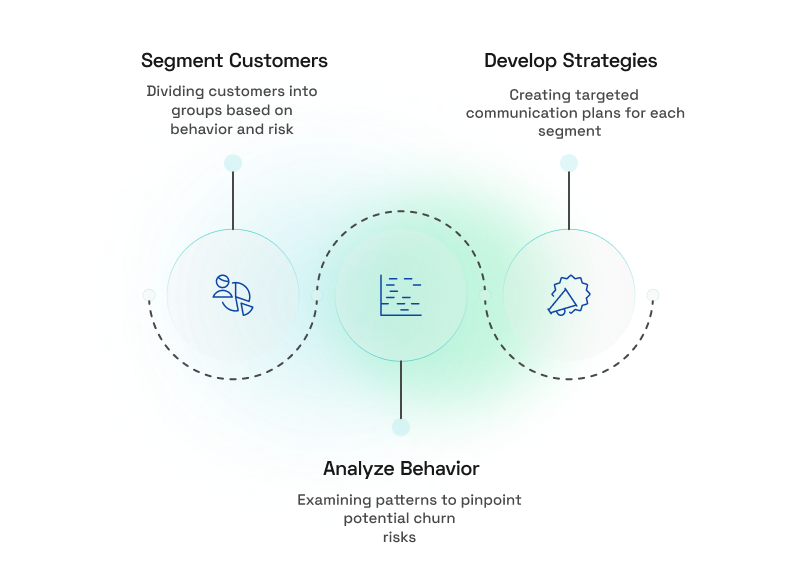
Use customer data from your CRM, website analytics, and transaction records to segment customers. Tools like customer health scores, churn prediction models, and cohort analysis can be especially helpful.
Once you have your segments, analyze customer behavior to identify groups more likely to churn. These segments might include customers who:
- Aren’t using the product as much as others (underutilization).
- Have had negative experiences (e.g., complaints, poor customer service interactions).
- Show signs of disengagement (e.g., low interaction rates, reduced frequency of use, lack of communication).
Next, develop targeted communication strategies for these segments. For example:
- For disengaged users, send re-engagement emails with product tips or special offers.
- For customers with complaints or issues, reach out with personalized customer support or tailored solutions to address their concerns.
By segmenting customers based on churn risk and creating retention plans tailored to each group’s reasons for churn, you can more effectively reduce churn and improve long-term customer loyalty
2. Enhance Customer Engagement
Relevant and timely engagement is key to preventing customers from feeling ignored, fostering a sense of ongoing partnership, and ultimately making the difference between a customer staying or leaving. For example, if a customer is repeatedly searching for a product or service, instead of showing the same results, you can provide quick navigation based on their behavior.
- When new features or products are introduced, don't just share information. Proactively educate customers on how these updates can benefit them, ensuring they feel informed and valued.
- Be proactive in addressing potential issues. If a customer's payment method is about to expire or they've encountered bugs, reach out before they consider leaving. Automated workflows can help identify these issues early, allowing you to intervene with tailored solutions.
- Build a sense of community. When customers feel they are more than just a transaction and become part of a larger brand story, they are far more likely to stay engaged. Consider creating user forums, VIP loyalty programs, or social media groups where customers can interact with each other and your brand.
These are just a few examples. Think about how you can enhance customer engagement based on their behaviors and needs.
3. 24/7 Customer Support
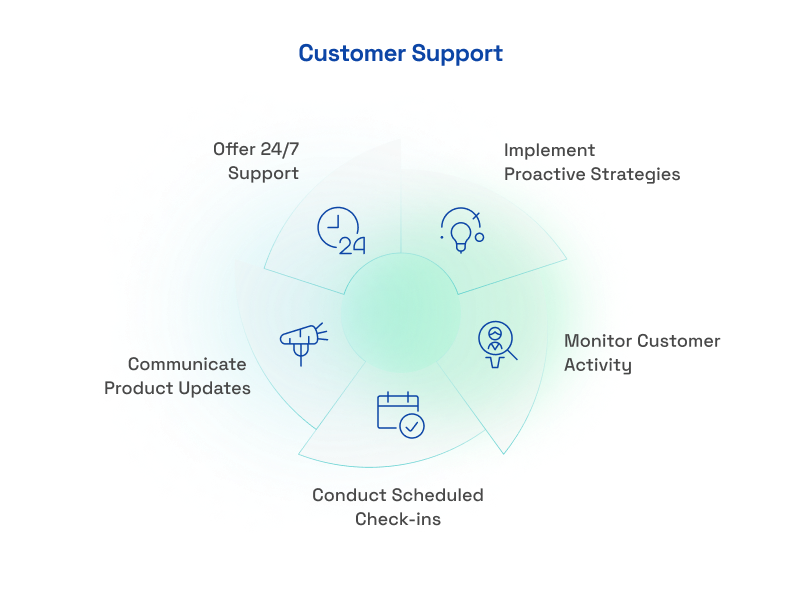
Though it may seem like a classic approach, offering 24/7 customer support remains a powerful tool for customer retention. It often serves as the last line of defense between a satisfied, loyal customer and one who decides to leave. 24/7 support can take various forms, including:
- Live chat support on your website or app
- Phone support, with a helpline available around the clock
- Self-service options such as knowledge bases, FAQs, or instruct
Create a Culture of Proactive Support
Rather than waiting for customers to run into issues or voice complaints, proactive support focuses on identifying potential problems early and addressing them before they escalate. Some ways to implement proactive support include:
- Monitoring customer activity to spot issues before they occur (e.g., if a user is struggling to complete a task)
- Scheduled check-ins to assess if customers are satisfied or need assistance
- Product updates and maintenance notifications to keep customers informed in advance
When combined, 24/7 support and proactive strategies create an environment where customers feel heard, valued, and well-supported at every stage of their journey.
4. Customer-Centric Experience
Customer-centric enhancements aim to improve the user experience and better meet customer needs. When customers find a product or service difficult to use, frustration increases, often leading to abandonment which is a direct pathway to churn.
Here’s how you should develop experience:
- Introduce new features or tools based on customer requests – Actively listening to customer feedback and making improvements based on their needs ensures that your product evolves to solve real challenges. This approach demonstrates that you value customer input, making them feel heard and appreciated.
- Enhance existing features to improve usability – A more user-friendly product increases habitual usage and fosters long-term commitment. When customers see ongoing improvements, they are more likely to trust your brand and remain loyal.
- Fix bugs and address frequent technical issues – Even minor technical problems can significantly impact customer retention. A product that fails to work as expected causes frustration, leading to churn. Small, repeated issues such as app freezes or unresponsive buttons can erode trust over time. Fixing a single technical issue, like a slow checkout process, can directly improve revenue, retention, and reputation while preventing churn.
Customer-centric experiences are all about making the customer’s experience smoother and more effortless, even through small but meaningful improvements.
5. Flexible Terms and Conditions
When customers feel they have no choice but to cancel due to pricing or a lack of flexibility, churn is the inevitable result. By offering flexible terms and conditions, businesses can provide alternative options that keep customers engaged rather than forcing them to leave.
This approach includes:
- Allowing customers to temporarily reduce their spending instead of canceling entirely – If a customer is struggling financially, they may cancel because they see no other option. Instead of losing them completely, offering a lower-tier plan or a pause option helps them maintain their relationship with the brand.
- Making it easy to switch between plans or adjust services based on needs – Customers often cancel when their current plan no longer fits their situation. Providing options like monthly vs. annual billing, customizable plans, or no long-term commitments gives them a sense of control, reducing the likelihood of them leaving.
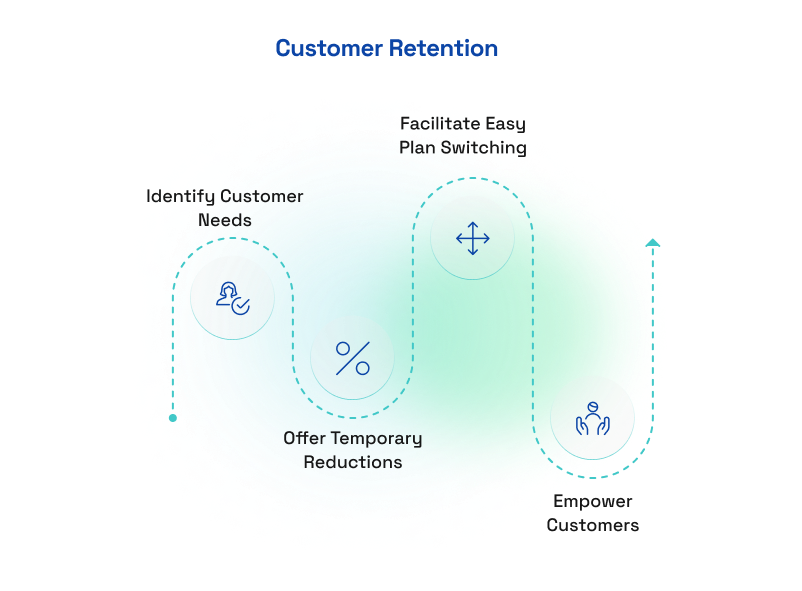
Adapt to customer needs rather than enforcing rigid rules by offering downgrade, pause, and contract flexibility. It empowers customers to manage their spending and service usage on their terms. This reduces frustration and keeps them engaged for longer.
6. Solicit Regular Feedback and Act on It
Understanding why existing customers leave is crucial for reducing churn. At the heart of this is actively listening to your customers. You can gather valuable feedback through various methods, such as surveys, polls, interviews, or informal conversations.
- Surveys like NPS (Net Promoter Score) and CSAT (Customer Satisfaction) provide insights into customer satisfaction levels. They reveal what customers like about your product and what areas need improvement. These surveys give customers a platform to voice their concerns, offering data you can use to make informed decisions.
- When customers decide to leave, conducting an exit interview is a prime opportunity to collect critical feedback. It helps you understand whether they’re leaving due to price, dissatisfaction with the product, or other reasons. This feedback reveals common pain points, allowing you to address issues that may impact retention.
Additionally, after every interaction, asking customers how satisfied they are with the service can provide early warnings of dissatisfaction. If responses indicate concerns, follow up immediately to resolve them.
For instance, when a customer cancels a subscription, don’t let them go without understanding why. You can ask, “What could we have done to prevent this?” or “Was there a specific feature or issue that led to your decision?” While it may feel intrusive at times, knowing the reasons behind a customer's decision is key to improving retention.
7. Reward Referrals
Referral incentives are a marketing tactic that encourages existing customers to recommend your products or services to others, usually in exchange for rewards.
- Discounts: A percentage off the next purchase.
- Cash or Credits: Monetary rewards or credits that can be used for future purchases.
- Free Products or Services: A complimentary item or service when a referral leads to a sale.
- Exclusive Perks: Access to premium features, early access to new products, or invitations to special events.
- Loyalty Points: Points that accumulate and can be redeemed for rewards, promoting long-term engagement.
The key is to make these incentives enticing enough for customers to take action, but not so overwhelming that they feel like they're being pressured into referring others. Customers who are actively referring to your brand are essentially becoming advocates. Advocates are the least likely to churn because they have a strong, positive connection with your brand and see the value in it.
8. Adapt Churn Prediction Models
Churn prediction models help identify at-risk customers using data analytics and machine learning (ML). These models analyze historical customer behavior, engagement patterns, and external factors to predict the likelihood of churn.
To enhance accuracy, continuously refine these models by enriching the data.
Key Data Sources for Churn Prediction:
- Behavioral Data: Logins, feature usage, session duration, purchase frequency
- Sentiment Analysis: Customer reviews, social media mentions, chatbot conversations
- Support Data: Number of tickets raised, resolution time, negative feedback
- Competitor Activity: Customers searching for alternatives, trialing other services
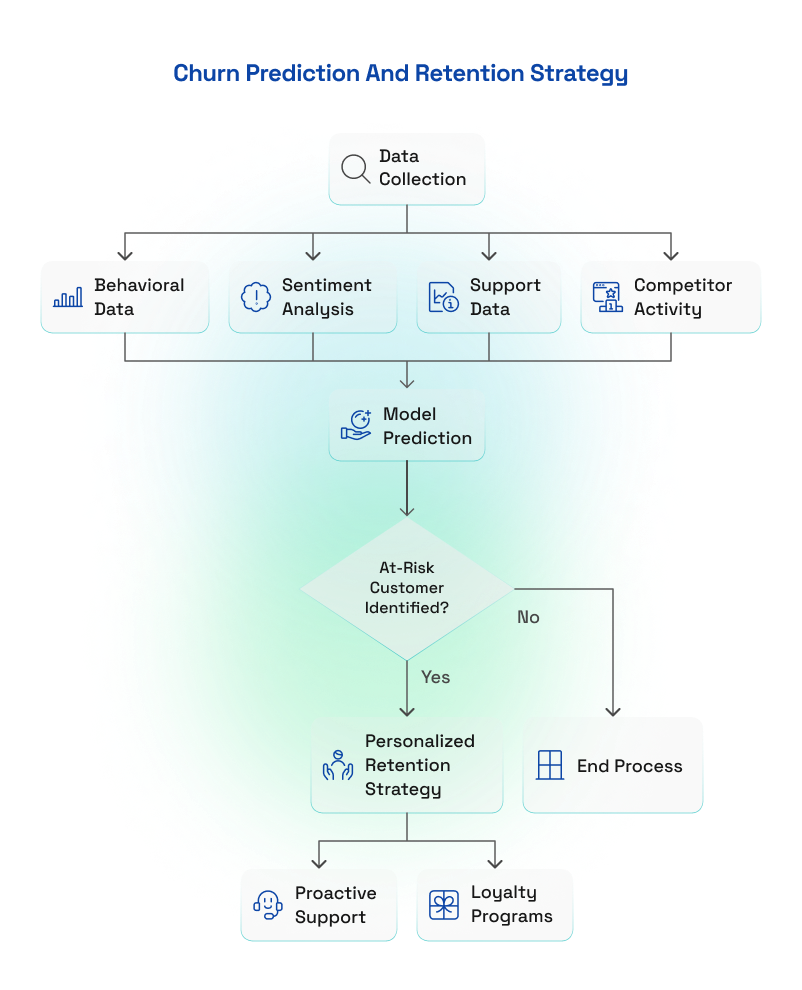
Once the model identifies at-risk customers, businesses must act before they churn. Personalized strategies, such as proactive support for specific concerns or loyalty programs, can help retain them.
Why does churn reduction matter?
Reducing customer churn is crucial for business growth, profitability, and customer loyalty. It isn’t just about keeping customers it’s about protecting your revenue and reputation.
Here’s why improving churn rate matters:
- Save Money: Keeping customers costs less than finding new ones.
- Higher Customer Value: The longer they stay, the more they spend over time.
- Stronger Loyalty: Happy customers promote your brand and bring referrals.
- Less Work for Sales & Marketing: Lower churn means less chasing new leads and more focus on growth
Causes For Customer Churn
Customer churn is a challenge for businesses, but understanding why customers leave is the first step toward improving churn rate and increasing retention. Below are the most common reasons for customer churn and how to address them with effective churn reduction strategies.
- Poor Customer Experience: A frustrating customer experience is one of the biggest contributors to churn. Long wait times, difficult navigation, or unresolved issues can push customers away. Businesses that fail to optimize the customer journey risk losing loyal users.
- Perceived Lack of Value: Customers will leave if they no longer see value in your product or if it doesn’t meet their expectations. When the perceived benefits don’t justify the cost, they will look for alternatives.
- Irrelevant or Generic Communication: Failing to deliver personalized, relevant messages can make customers feel detached. When businesses don’t tailor recommendations or offers, customers lose interest.
- Inadequate Customer Support: Slow, ineffective support frustrates users. Customers expect quick, efficient, and multi-channel support, and failure to deliver can drive them to competitors.
- Attracting the Wrong Customers: Not every lead is the right fit. If your marketing efforts attract low-intent or misaligned customers, they are more likely to cancel subscriptions or stop using your service.
Conclusion
The key to long-term customer retention lies in delivering consistent value, addressing concerns before they escalate, and fostering meaningful relationships. Companies that prioritize customer experience and engagement will not only reduce churn but also drive sustainable growth.